Bicycle.LLC

← The work

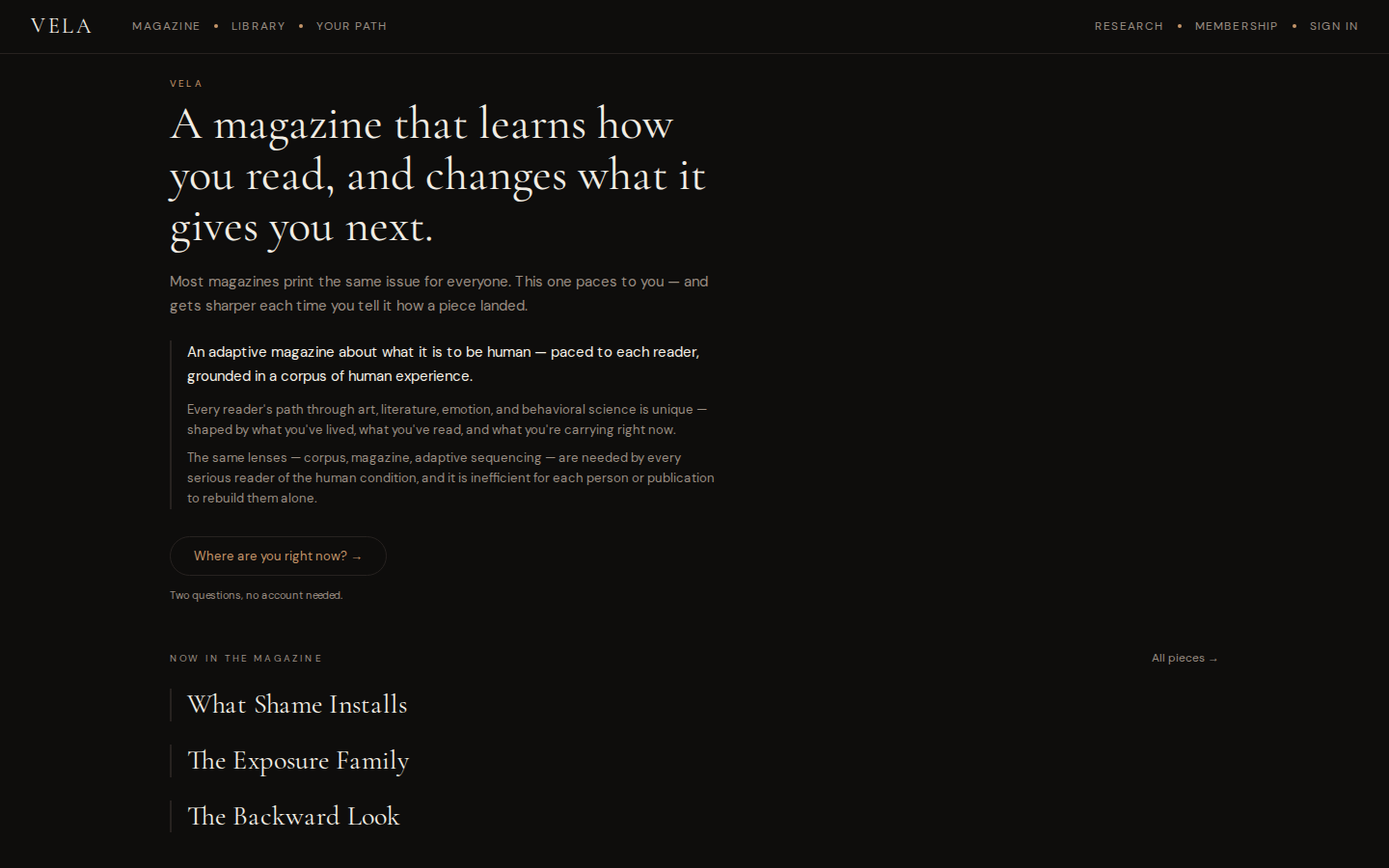
Vela is a free-to-read magazine of art, literature and emotion for adults, shaped to each reader.

Landing — magazine + sequences (2026-09-29)

I built Vela as a magazine for adults who want art, literature and emotion treated with care. The material that explains being human is everywhere, and the person who needs it still has to assemble it alone. Shame may appear in a painting, a clinician’s language, a novel and a memoir. Grief may be better served by one real passage than by a stack of vague recommendations. I wanted to put those materials in the same room and make the reason for each choice visible. Each recommendation on an emotion page therefore shows why the book belongs and gives the reader some of its actual language. The magazine also respects timing. It begins when the reader arrives and responds as images and pieces land. For readers without an account, the unread route stays in their browser because the magazine does not need to keep a server-side path for every visitor. My aim is for someone to recognize something true, follow the next piece and return.

Who it is for

Vela is for adults who arrive with a feeling, a book or an image in mind and want material selected with care. It serves readers who prefer literature and art to self-help, want enough of a book to judge it for themselves, and value a magazine that responds to what holds their attention.

The problem

When you are trying to understand grief, shame, desire or faith, the useful material is scattered across novels, memoir, art, religion, psychology and sociology. Self-help can feel thin, and popularity lists rarely show the sentence that earned a book its place. You suspect the answer exists, but you are left to cross disciplines, compare recommendations and work out which books truly enter the feeling before you spend time or money on them.

What I built

Vela is a free-to-read magazine for adults who want figurative art, longform writing and literature chosen with care. It draws fully attributed works from museum collections, and each reader’s magazine begins on the day they arrive. Responses to images and pieces shape what comes next. Its emotion pages turn a feeling into a shortlist of books, a reason each belongs and a passage from each book. Those lists draw on 1,109 book records that connect claims, selected passages, themes and emotions. For readers without an account, the current unread route stays in their browser for 30 days, while Vela keeps an anonymous response record instead of a server-side route for each visitor.

What is new in it

  • Each reader’s magazine begins on arrival rather than on a publication calendar. Responses to images and writing shape the remaining route, so the pace follows the reader’s attention instead of a fixed issue schedule.
  • Each recommended book comes with a reason and evidence from the text, allowing readers to judge the choice from the book’s own words. The underlying records connect claims, themes and emotions across the library.
  • Figurative works come from museum collections with full attribution. The art sequences keep that provenance visible while arranging works for sustained viewing and response.
  • For readers without accounts, the unread route remains in their browser. Vela stores an anonymous response record to prevent duplicates and allow answer revision without creating a server-side reading route for each visitor.

Where it stands

Vela is built to become the place someone starts when they want to know what to read for a feeling. The aim is a trusted shortlist of three to five books, a clear reason for each and one passage already read. Vela is live today with its free-to-read magazine, emotion pages, attributed art and responsive reading routes.
More screens

How it works

Sourcing, curation, and the Reincarnation engine.

Sourcing, curation, and the Reincarnation engine.

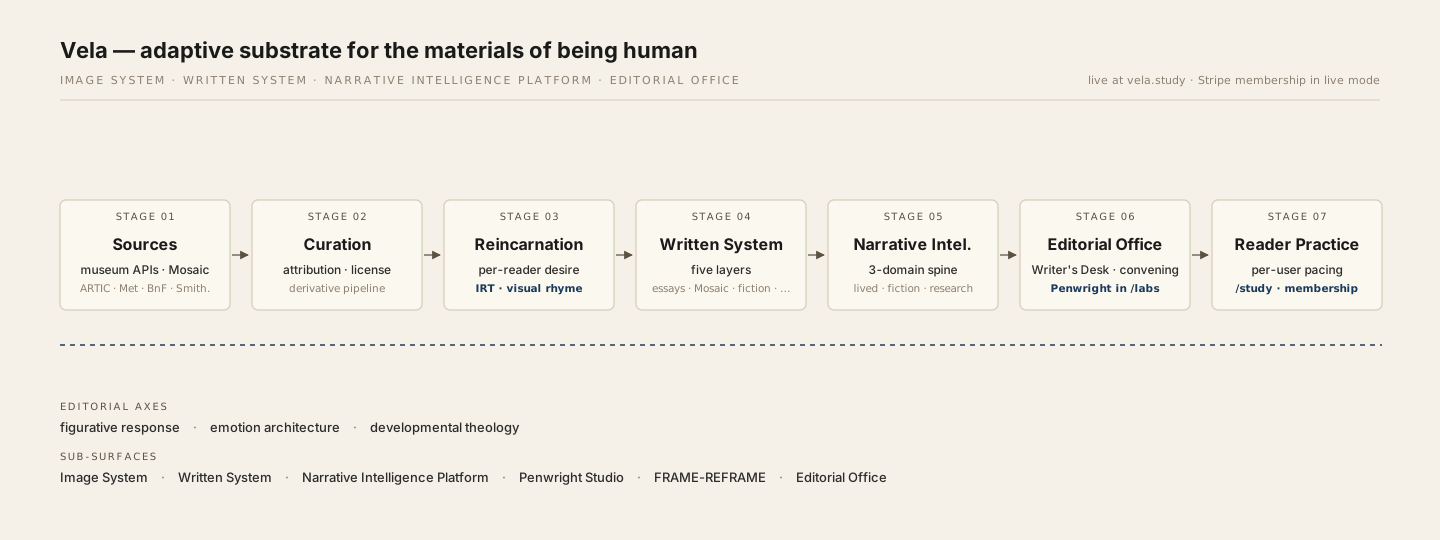
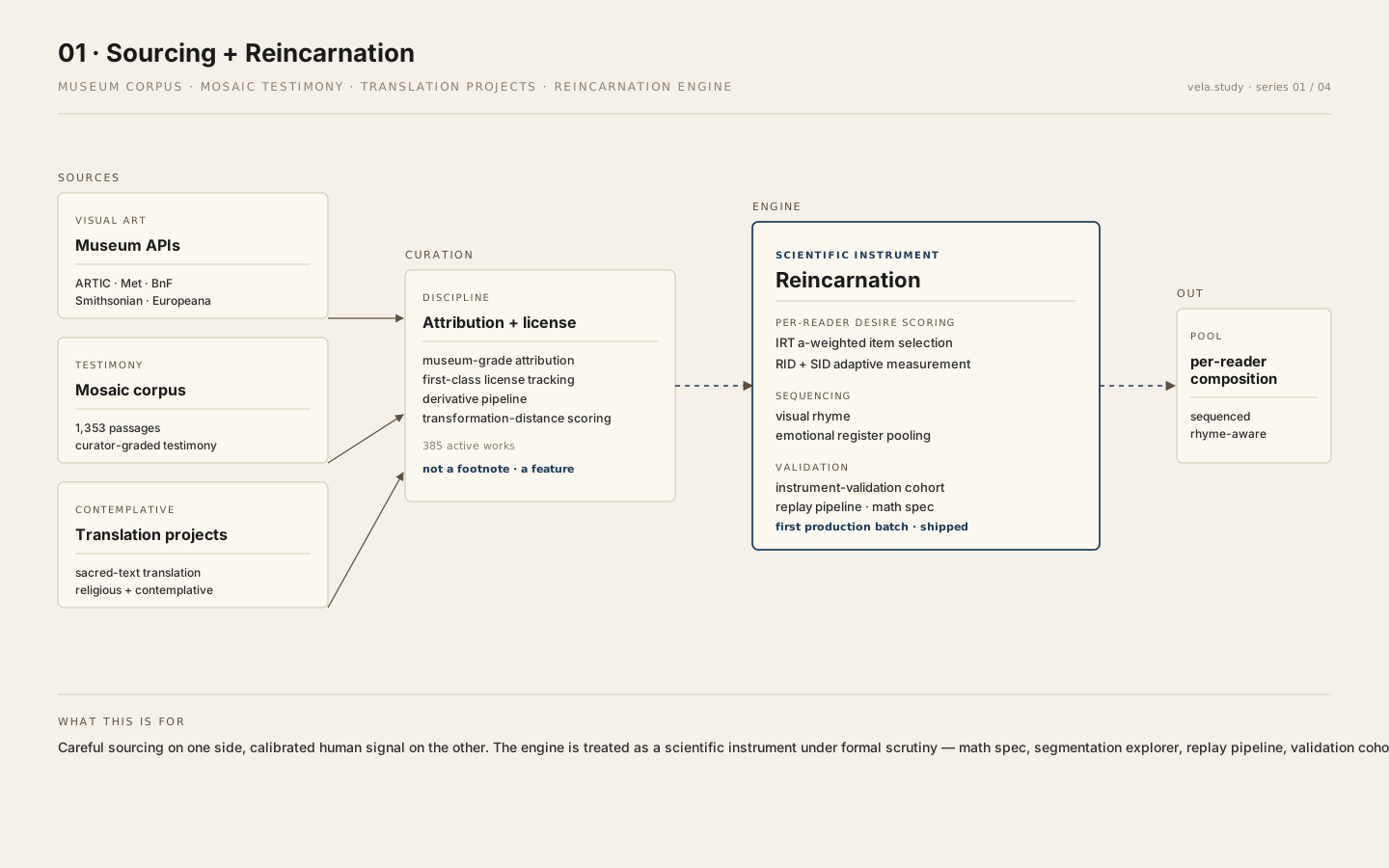
Five museum APIs (ARTIC, the Met, BnF, Smithsonian, Europeana) supply the visual-art corpus — 385 active works pulled under museum-grade attribution and first-class license discipline. The 1,353-passage Mosaic testimony corpus and the contemplative-text translation projects (sacred-text translation across religious and contemplative traditions, broadly) sit alongside. The Reincarnation engine reads per-reader desire on the IRT-weighted axes the math spec defines and sequences the pool across visual rhyme and emotional register. The engine is treated as a scientific instrument under formal scrutiny — segmentation explorer, replay pipeline, instrument-validation cohort — because the encounter on the other side of it matters to the reader's actual life.

Five-layer Written System and the Narrative Intelligence Platform.

Five-layer Written System and the Narrative Intelligence Platform.

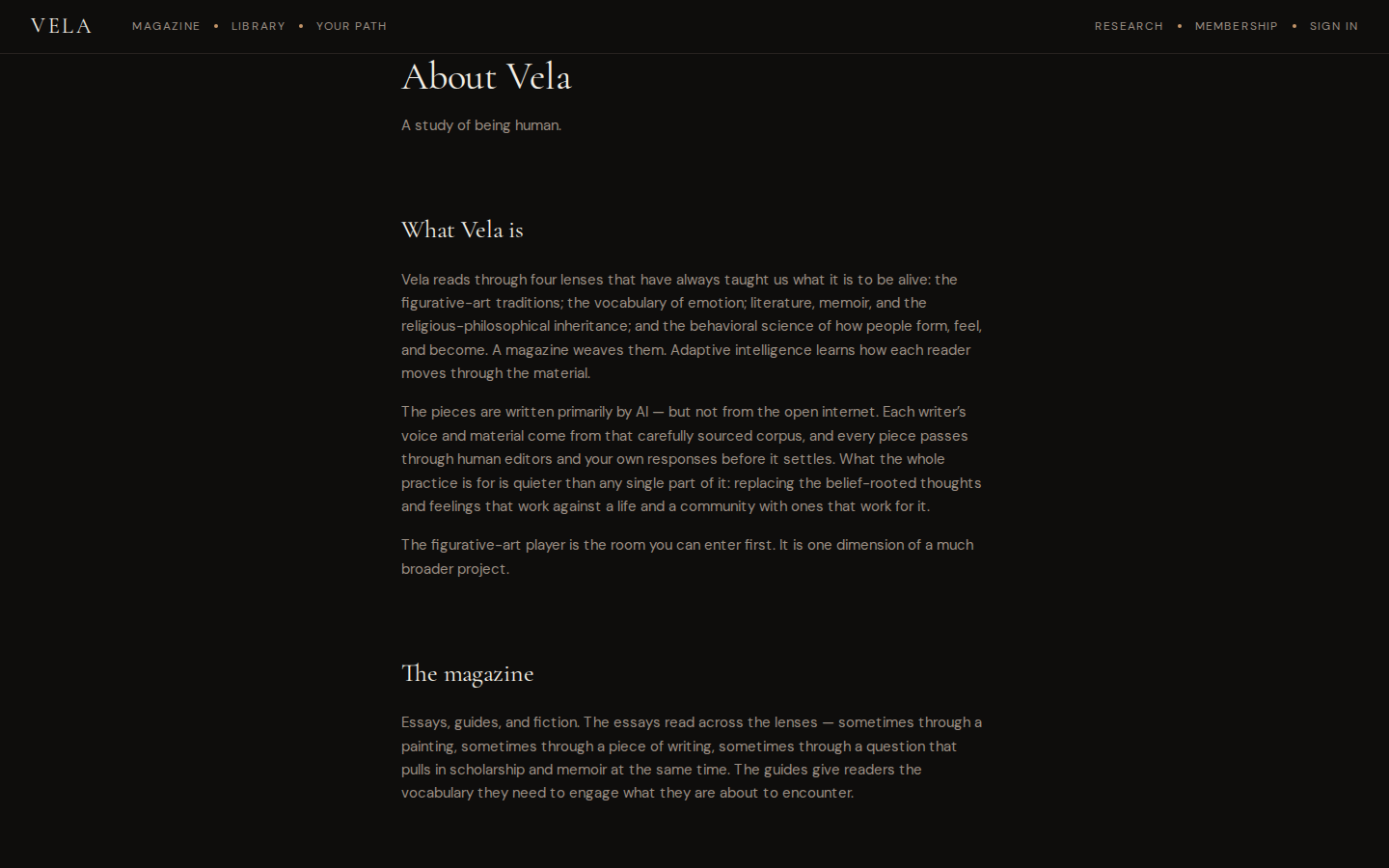
Five layers — analytical essays, Mosaic testimony, fiction, audio readings, and reader-authored submissions — coexist on one foundation. The Narrative Intelligence Platform generalizes the Mosaic editorial engine into a three-domain spine (lived, fiction, research) with six admin surfaces deployed: Dashboard, Sources, Excerpt Review, Quote Explorer, Insight Workbench, Guide Builder. Each reader's magazine begins when they arrive rather than on a publishing calendar. Three editorial axes — figurative response, emotion architecture, developmental theology — share the foundation without collapsing into each other; emotion is the core axis after the 2026-04-30 pivot. These are not features in the abstract; each is an instrument for the human work of replacing belief-rooted thoughts and emotional patterns that work against a life and community with ones that work for them.

Editorial Office, Penwright, the Pennebaker Exercise Studio, and FRAME-REFRAME.

Editorial Office, Penwright, the Pennebaker Exercise Studio, and FRAME-REFRAME.

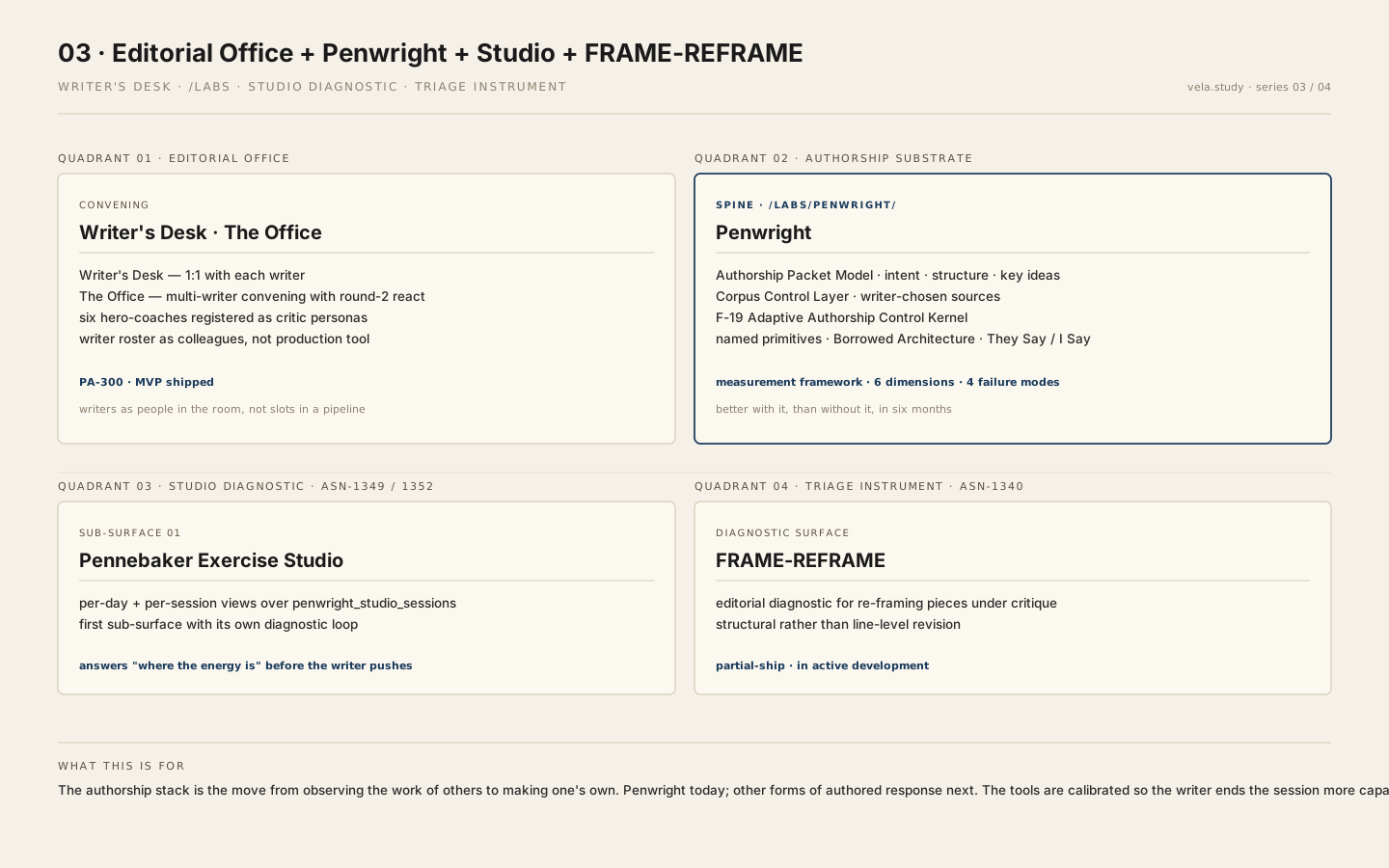
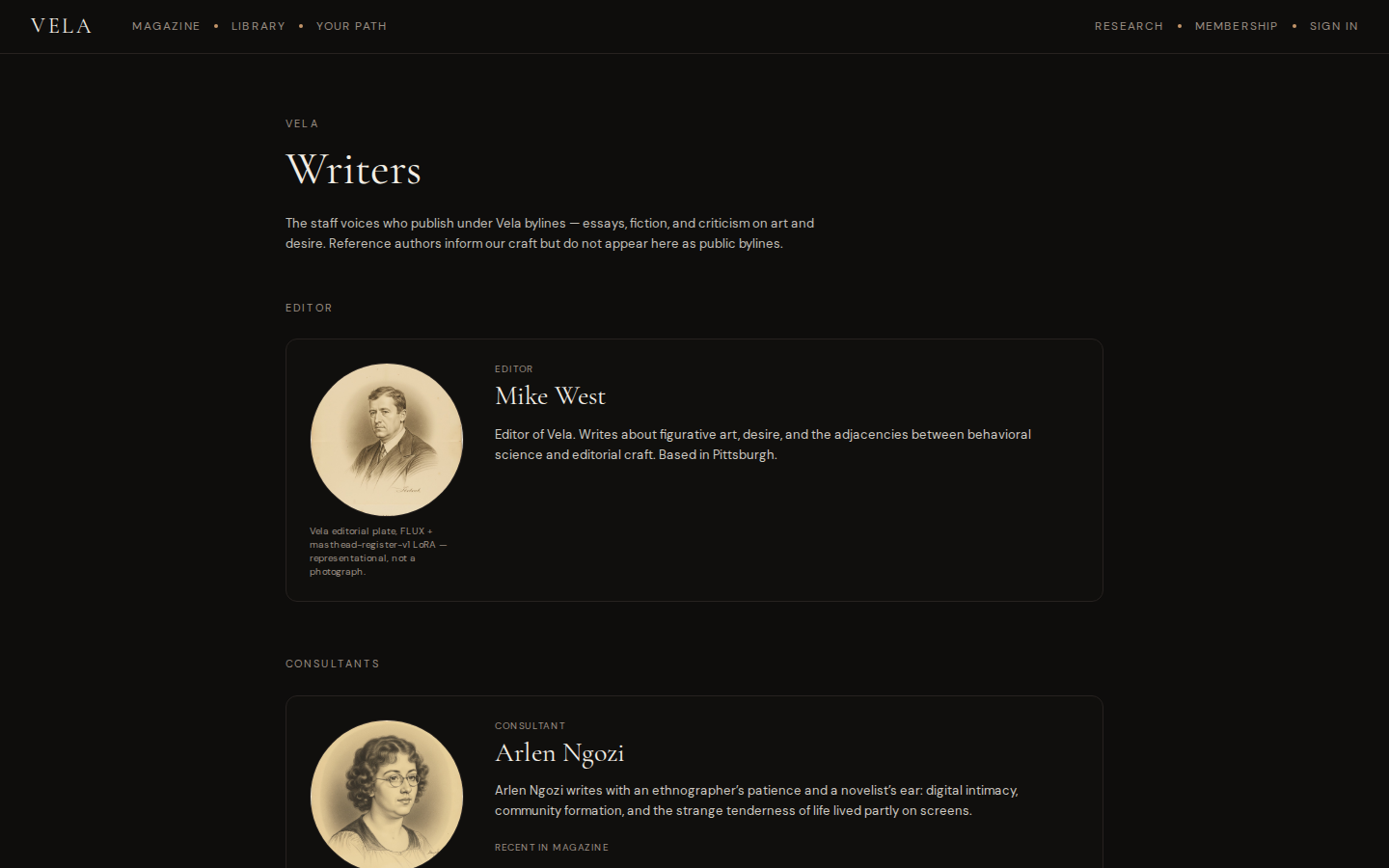
The Editorial Office turns the writer roster from production tool into colleagues — Writer's Desk for one-on-one work with each writer, The Office for multi-writer convening with a round-2 react. Penwright lives in /labs as the authorship instrument: Authorship Packet Model, Corpus Control Layer, the Adaptive Authorship Control Kernel as the spine, and a growing set of named writing-method primitives (Borrowed Architecture, They Say / I Say). The Pennebaker Exercise Studio is the first sub-surface to receive its own per-day and per-session diagnostic over `penwright_studio_sessions`; FRAME-REFRAME is the editorial triage instrument for re-framing pieces under structural critique. The arc the authorship stack is built for is the move from observing the work of others to making one's own — Penwright today; other forms of authored response next.

Reader practice and the /study research program.

Reader practice and the /study research program.

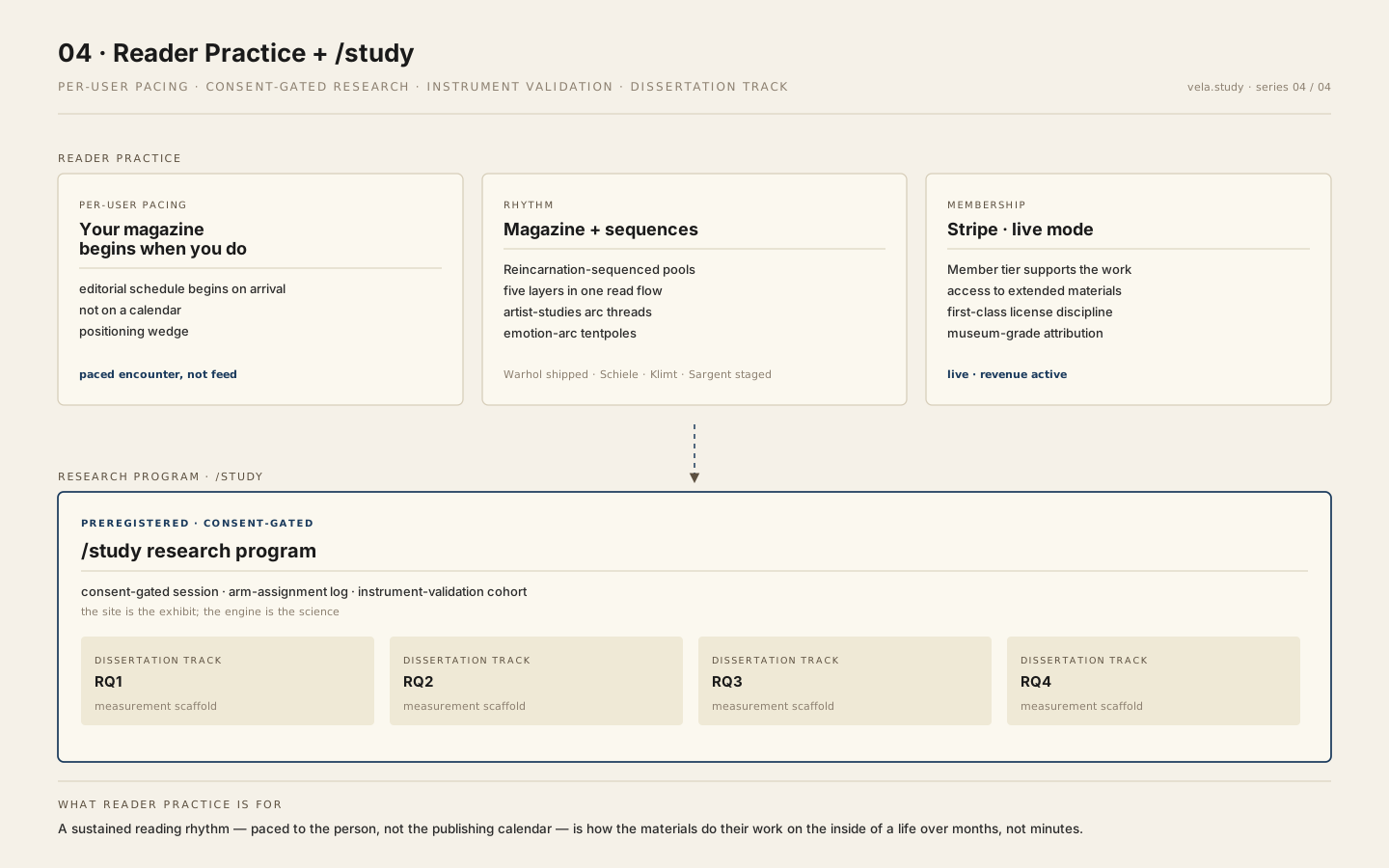
Your magazine begins when you do — paced to the reader, not to a publishing calendar. Underneath the magazine sits /study: a preregistered research program with consent-gated session, arm-assignment log, instrument-validation cohort, and dissertation-track scaffolds for RQ1 through RQ4. The site is the exhibit; the engine is the science. A sustained reading rhythm — months, not minutes — is the shape in which the materials do their work on the inside of a life and the communities a life is part of. The word for what that work is, when all of these instruments are doing their part, is liberation.